Please put an active hyperlink to our site (www.rusnature.info) when you copy the materials from this page
Russian Zapovedniks and National Parks
<<< Zapovednik "Poronaisky" | Index and Map | Zapovednik
"Ussuriysky" >>>
Zapovednik "Sikhote-Alinsky"
Address: 692150 Primorsky Kray, Terneysky r-n, pos. Terney,
Partizanskaya st., 46.
Zapovednik Sikhote-Alinsky, in the southern part of Primorsky Krai, was established in
1935. Its area is 390,2 thousand ha.
It is the greatest Zapovednik of the southern Far East of Russia and its nature
complexes are only little disturbed.
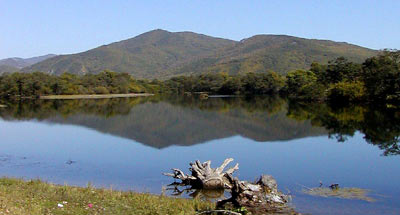
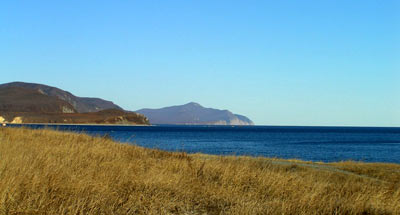
The Zapovednik is located on the eastern and western slopes of Middle Sikhote-Alin and
includes the Japanese seashore. Mountain ranges lie in the altitude range from 500 to 800
m above the sea level. The highest elevation is the Glukhomanka Mountain (1593 m). The
main rivers are Serebryanka, Taezhnaya, Dzhigitovka, flowing into the Sea of Japan, and
the river Kolumbe, belonging to the river Ussuri basin.
Woodland covers 99% of the area. Altitude zones are well-defined: the narrow line of
shore vegetation formed by littoral plants and shrubs, including the ramanas roseis,
higher up, replaced by oak forests — Siberian-pine-broad-leaved and fir-spruce forests,
birch stands, elfin Siberian pine thickets and mountain-tundra vegetation. The Siberian
pine-broad-leaved forests are the most peculiar, with a lot of layers and a lot of
species.
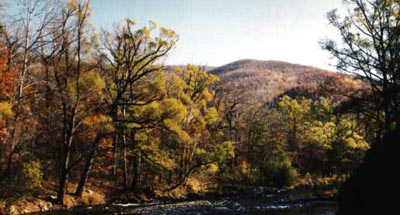
Manchurian flora species prevail in those forests, some of these species are rare (or
very rare), including the Japanese yew, rhododendrons (Rhododendron sichotense and
Rhododendron faurieri) (listed in the Red Data Book of the Russian Federation). Plants of
Okhotsk flora are also to be found, including the Yeddo spruce, Khingam fir. The species
of East-Siberian and Mongolia-Dahurian origin are found to contribute to the flora.
A combination of species of different origin, is also characteristic of the fauna. In
the fir-spruce forests the following typical taiga inhabitants are common: the common
cross-bill (Loxia curvirostra), Siberian jay (Perisoreus infaustus), three-toed
woodpecker, wolverine. By contrast, in the valleys of broad-leaved forests, tropical
species are typical, including ashy minivet, Chinese white eye, eastern broad-billed
roller and also Indian marten, which ranges southward to the Equator.
In communities of different altitude zones "northern" and
"southern" dwellers form some very diverse combinations, their ranges widely
overlapping. For example, virtually in the whole area of the Zapovednik both the sable and
the tiger are common.
According to their status, many local species are rare, with narrow distribution
ranges, including the endemics of the Far East southern fauna. The following species are
listed in the Red Data Book of the Russian Federation: the Amur tiger, Asiatic black bear,
Himalayan chamois, Chinese merganser, mandarin duck, white-tailed eagle, fool hen,
Blakiston's fish owl. The Sikhote-Alinsky Zapovednik is the world-largest Amur tiger
reserve.
The Zapovednik has a biosphere status.
<<< Zapovednik "Poronaisky" | Index and Map | Zapovednik
"Ussuriysky" >>>
|