Please put an active hyperlink to our site (www.rusnature.info) when you copy the materials from this page
Biomes and Regions of Northern Eurasia
Boreal Forests
<<< Arctic Environment: Environmental
Changes in the Late Pleistocene and Holocene | Biomes &
Regions Index | The Principal Forest-forming Species and their
Ecology >>>
Introduction
Boreal coniferous forests have a circumpolar position and occur on three continents:
Europe, Asia, and North America. In the countries of the former Soviet Union (FSU),
coniferous forests occupy about 530 million hectares. They comprise about 21 per cent of
all wooded lands on the globe and account for 5 3 per cent of all coniferous forests.
Within the boreal forests, three structural divisions are recognized:
1. Forest-tundra ecotone, which occurs north of the Arctic tree line. It is represented
by prostrate woodlands and individual trees scattered across the tundra. Biota of the
forest-tundra ecotone is very similar to that of southern tundra (see above) and the
difference between the two zones is in the absence of trees from zonal communities in
southern tundra.
2. Open or sparse forests develop further south. Trees grow about a dozen meters from
each other and often form regular patterns (Plate 9.1).
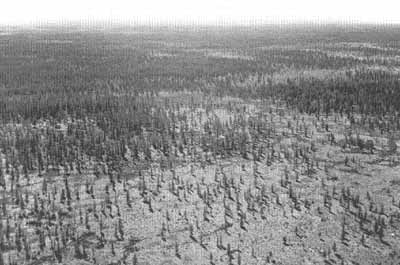
Plate 9.1 Open larch forests in Central Siberia (photo: courtesy of M.
Kuznetsov)
3. Close forests are composed of continuous stands of trees.
The boreal forests of Northern Eurasia are known as taiga. Originally this term was
used to describe the dark coniferous forests formed by spruce, fir, and Siberian pine
(termed the 'dark taiga' species). However, in a broader sense the vast forests of Central
and Eastern Siberia and the Pacific sector formed by larch and pine are also referred to
as taiga or 'light taiga'. In the south, taiga is succeeded by the mixed coniferous and
broad-leaved deciduous forests in the European territory and the Far East. In Western and
Central Siberia, where the development of broad-leaved forests is limited by increasing
aridity, a narrow zone of birch and aspen forests separates coniferous forests from the
wooded steppe, while in Eastern Siberia coniferous forests border directly on the
forest-steppes.
<<< Arctic Environment: Environmental
Changes in the Late Pleistocene and Holocene | Biomes &
Regions Index | The Principal Forest-forming Species and their
Ecology >>>
Contents of the Boreal Forests section:
Other sections of Biomes & Regions:
|
|