Please put an active hyperlink to our site (www.rusnature.info) when you copy the materials from this page
Russian Zapovedniks and National Parks
<<< National Park "Samarskaya Luka"
| Index and Map | Zapovednik
"Dagestansky" >>>
Southern Russia
The list of Southern Russia Zapovedniks (Nature
Reserves) and National Parks:
The region of Northern Caucasus conventionally includes the Rostov
Region, the Krasnodar and Stavropol territories and a number of autonomous republics that
are directly adjacent to the main Caucasus Range. The largest of them is Dagestan, facing
the Caspian Sea on the east.
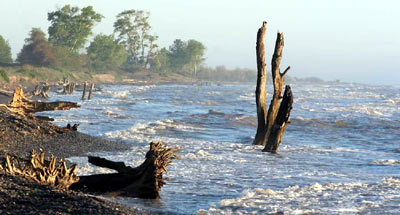
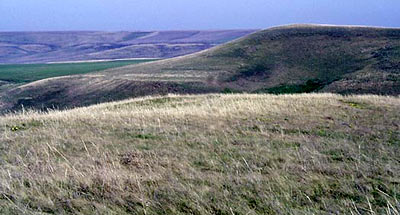
The northern part of the region belongs to the zone of European steppes, but the former
steppe nature has been heavily modified under the impact of agriculture. The sheep's
fescue and feather-grass plant communities have been replaced by wheat croplands, and only
in ravines one can find the original dwellers of these areas, including bobacs, jerboas,
hamsters and steppe polecats. The spotted polecat, notable for its coloration, has become
very rare and is listed in the Red Data Book along with the steppe eagle, great bustard
and little bustard, which became almost extinct in Northern Caucasus although were common
some time back.
The characteristic feature of the northern Rostov Region is bairak forests, bairak
meaning ravines and associate tree species (maples, elms and ashes, etc.). Occasionally,
on sandy soils pines are planted. The entire plain part of the region is characterized by
diverse man-made field protection plantations. To the south, within the Krasnodar and
Stavropol territories stretches the broad Ciscaucasus zone, where steppes and fields are
first replaced by forest-steppe landscapes, and subsequently, by oak-ash, hornbeam and
mixed groves, which are followed by broad-leaved forests.
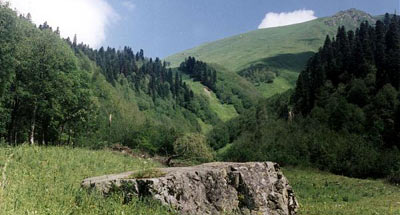
The Caucasus is an ancient mountain country. The watershed range separating the basins
of the Black and Caspian seas stretches from west to south-east over 1000 km. Both,
nature, the composition of the population and the economy of this region are characterized
by exceptional patchiness and complexity. This is largely determined by vertical zonality,
i.e. the relationship between particular landscapes and the height, steepness and the
aspect of the mountains.
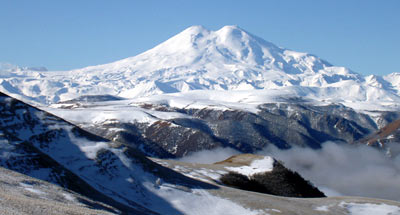
Within the Russian Federation lie the northern slopes of the Great Caucasus and its
highest mountains (Elbrus — 5633 m, Shkhara — 5201 m, etc,), and also the eastern and
northwestern parts of the main range. One can find there the entire diversity of landscape
from dry steppes and forest-steppes in the piedmont to the alpine meadows, snow patches
and glaciers on the mountain tope. But the broadest zone is occupied by broad-leaved and
coniferous forests on the mountain slopes with oak, beech, ash, chestnut trees and also
the Caucasian species of the spruce and fir. In addition, the eastern part of the main
range is characterized by a presence of valuable fruit bearing trees and shrubs.
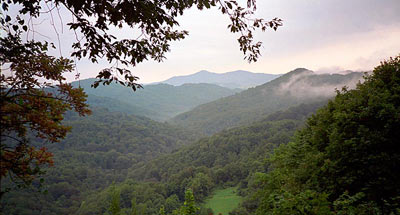
Found among them are numerous representatives of the so-called "Kolkhida"
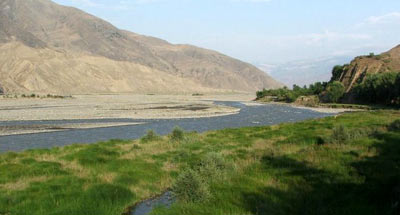
subtropical flora. Characteristic for the southern Caucasus are the liana floodplain
forests, which within Russia, occur only in some Dagestan areas (Samur River).
The plant diversity is matched by that of the wildlife. The region has numerous
endemics, i.e., forms that do not occur in any other places. There are some specific
subspecies of deer and wild boar, bear, and marten. In fact the distribution range of the
Caucasian tur is only restricted to the Caucasus The leopard, which was sighted until
recently, has now become extinct. The Caucasian European bison, destroyed in the 1920s,
was restored during the prewar years thanks to the import of European bisons and the
European-American bison crosses from Europe. There are many Caucasian endemic birds,
reptiles, and, particularly, insects, far from all of them being known to science.
The list of Southern Russia Zapovedniks (Nature
Reserves) and National Parks:
<<< National Park "Samarskaya Luka"
| Index and Map | Zapovednik
"Dagestansky" >>>
|